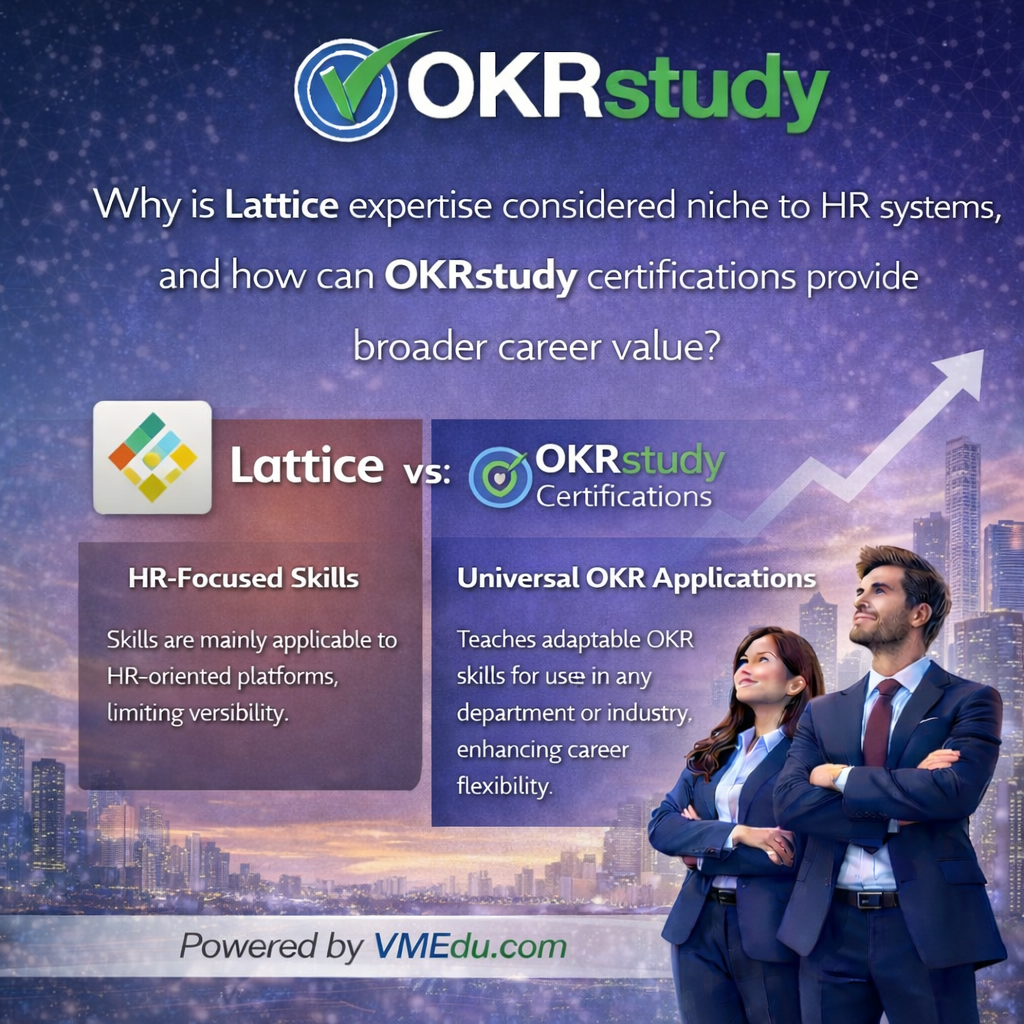
Platforms like Lattice are widely used in organizations, especially within HR and people management functions. They’re great for managing performance reviews, employee engagement, feedback cycles, and even OKRs in some cases. But here’s the catch: expertise in Lattice is often niche, meaning it’s mostly limited to HR-related processes and systems.
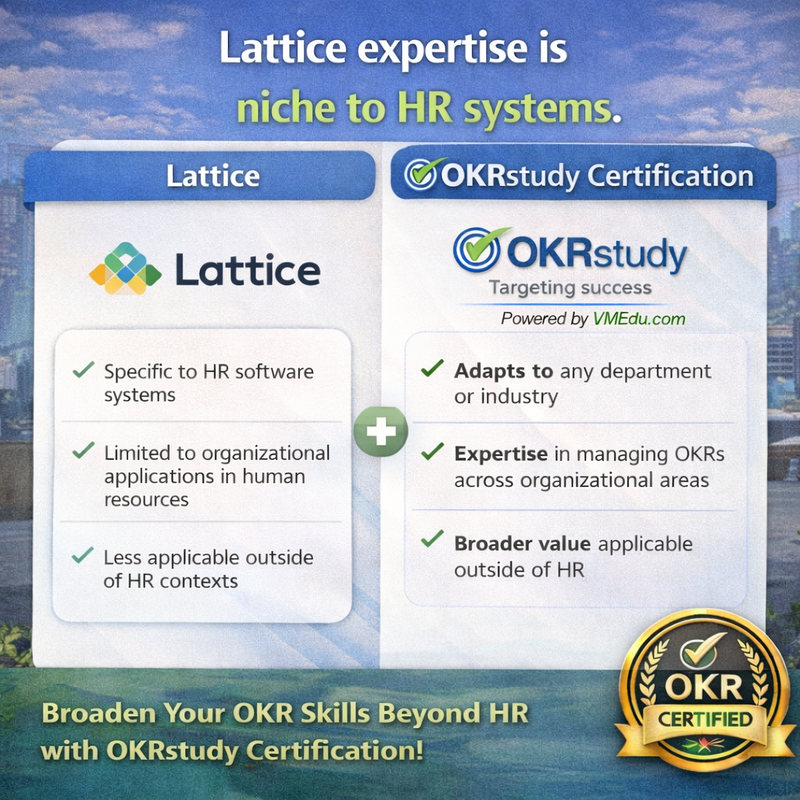
When you learn Lattice, you’re primarily learning how to use the platform, how to run performance reviews, set employee goals within the system, track engagement, and manage feedback. These are valuable skills, especially if you’re working in HR or people operations. However, this knowledge is tightly connected to the tool itself and the specific domain it serves.
The limitation shows up when you try to apply this expertise outside of HR. For example, if you move into roles like product management, operations, strategy, or consulting, Lattice-specific knowledge may not be as relevant. It doesn’t always translate into broader business or strategic thinking. In simple terms, it helps you manage processes within HR, but it doesn’t necessarily teach you how to drive business outcomes across different functions.
Another issue is dependency on the tool. Not every organization uses Lattice. Some use different HR systems, and others may not rely heavily on such platforms at all. So, if your skills are centered only around Lattice, you may need to start from scratch in a new environment. This can limit your flexibility and slow down your growth.
This is where OKRstudy comes in and provides a much wider perspective. Instead of focusing on a specific tool or domain, OKRstudy focuses on the core principles of OKRs, how to define meaningful objectives, create measurable key results, and align them with overall business goals. These are skills that go beyond HR and apply to every function in an organization.
OKRstudy certifications help you build this broader understanding. When you’re certified, it shows that you can think strategically and connect goals across different teams and departments. You’re not limited to managing HR processes; you can contribute to organizational performance at a higher level.
For example, whether you’re working in marketing, product, operations, or leadership, the ability to set clear goals and measure outcomes is always valuable. OKRstudy equips you with that ability, making your skills more transferable and versatile.
Another big advantage is adaptability. Since OKRstudy is tool-agnostic, your knowledge is not tied to any specific system. You can apply what you’ve learned in any organization, regardless of the tools they use. This makes your skill set more future-proof.
The certification also adds credibility. It shows that your knowledge has been learned in a structured way and validated through an assessment. This builds trust with employers and makes you stand out in a competitive job market.
It also boosts your confidence. When you understand OKRs at a deeper level, you’re more comfortable applying them in different scenarios, leading discussions, and contributing to strategic decisions.
In simple terms, Lattice expertise is useful but limited to HR systems. OKRstudy certifications, on the other hand, give you a broader, more flexible skill set that can be applied across roles, industries, and functions. Instead of being confined to one domain, you position yourself as someone who can drive alignment and results anywhere, and that’s what truly supports long-term career growth.