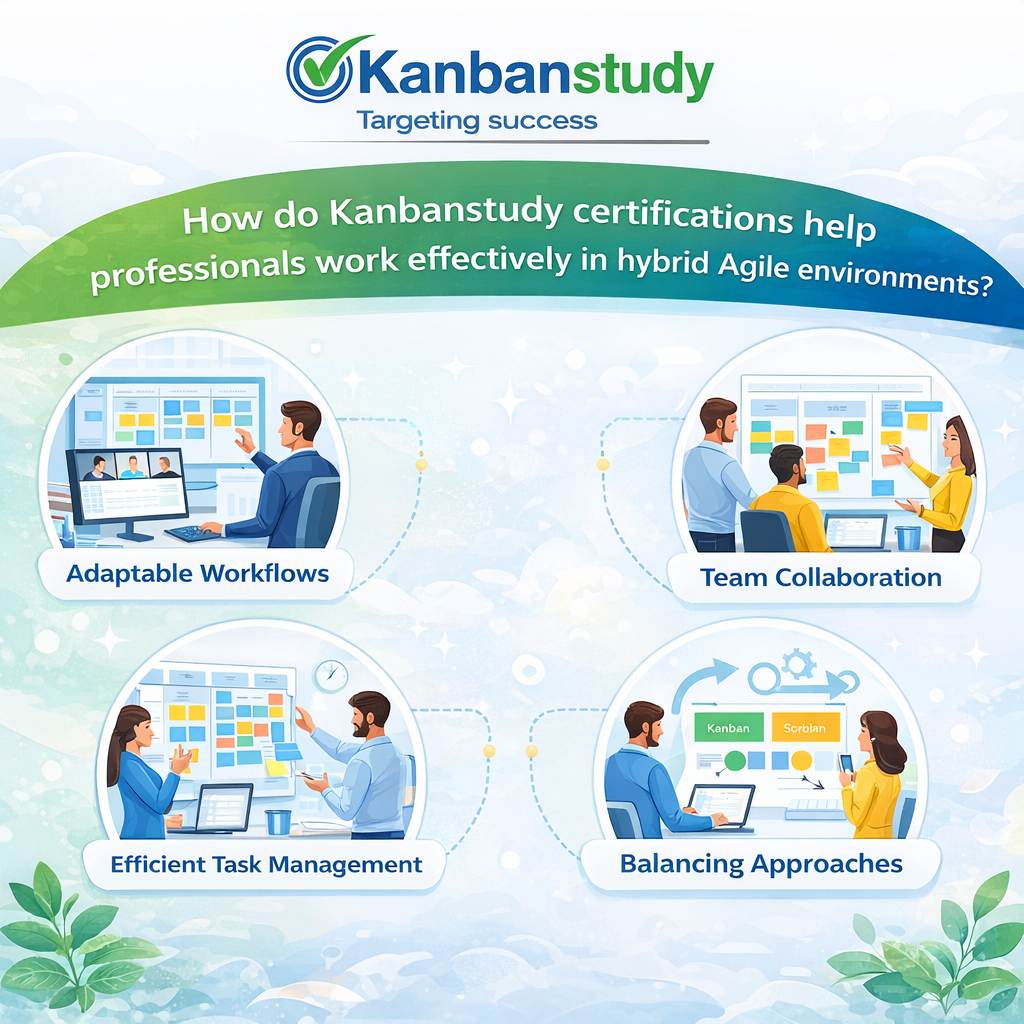
Working in hybrid Agile environments can feel a bit like juggling different worlds at once. You’ve got elements of Scrum, Kanban, traditional project management, and sometimes even ad-hoc workflows all mixed together. That’s where structured learning around Kanban really helps professionals stay effective without getting overwhelmed.
First off, it builds a strong sense of flow. In hybrid setups, work doesn’t always move in neat sprints. Tasks come in continuously, priorities shift, and dependencies pop up unexpectedly. Understanding how to visualize work using boards, limit work in progress, and manage flow helps you stay on top of everything without chaos taking over. You’re not just reacting anymore, you’re actually controlling how work moves.
Another big advantage is clarity. Hybrid environments often suffer from confusion around roles, responsibilities, and priorities. When you apply Kanban principles, everything becomes more transparent. You can see what’s in progress, what’s blocked, and what’s coming next. That visibility makes team conversations way more productive and reduces the usual back-and-forth.
It also makes collaboration smoother. In hybrid Agile, teams are often cross-functional and sometimes distributed. Kanban practices encourage continuous communication rather than waiting for scheduled ceremonies. Daily interactions become more natural because the work itself is visible. Instead of long meetings, teams can quickly align by just looking at the board and discussing what matters.
Then there’s adaptability, which is honestly the biggest survival skill in hybrid environments. Plans change, priorities shift, and customer needs evolve fast. With a Kanban mindset, you’re not locked into rigid cycles. You can adjust on the fly without disrupting the entire workflow. That flexibility helps teams respond faster and deliver value more consistently.
It also improves focus. When teams try to do everything at once, productivity drops. Limiting work in progress forces you to finish what you start before picking up new tasks. This simple shift leads to better quality work and fewer half-done items floating around. In a hybrid setup where distractions are common, this becomes a game changer.
Another underrated benefit is better decision making. When you track flow metrics like cycle time and throughput, you start making decisions based on data instead of assumptions. In hybrid environments where different methodologies collide, having data brings objectivity and helps teams improve continuously.
On a personal level, it boosts confidence. Instead of feeling lost in a mixed framework environment, you understand how to navigate it. You know when to use structured planning and when to rely on flow-based execution. That balance makes you more valuable to your team and your organization.
Finally, it helps bridge gaps between different ways of working. Hybrid Agile is all about blending approaches, and Kanban acts like a connector. It works well alongside Scrum, supports continuous delivery, and even fits into traditional setups. That versatility makes it incredibly useful for professionals who need to operate across different systems.
In simple terms, learning these practices doesn’t just teach you a method. It changes how you think about work, making you more organized, adaptable, and effective in any hybrid Agile environment.