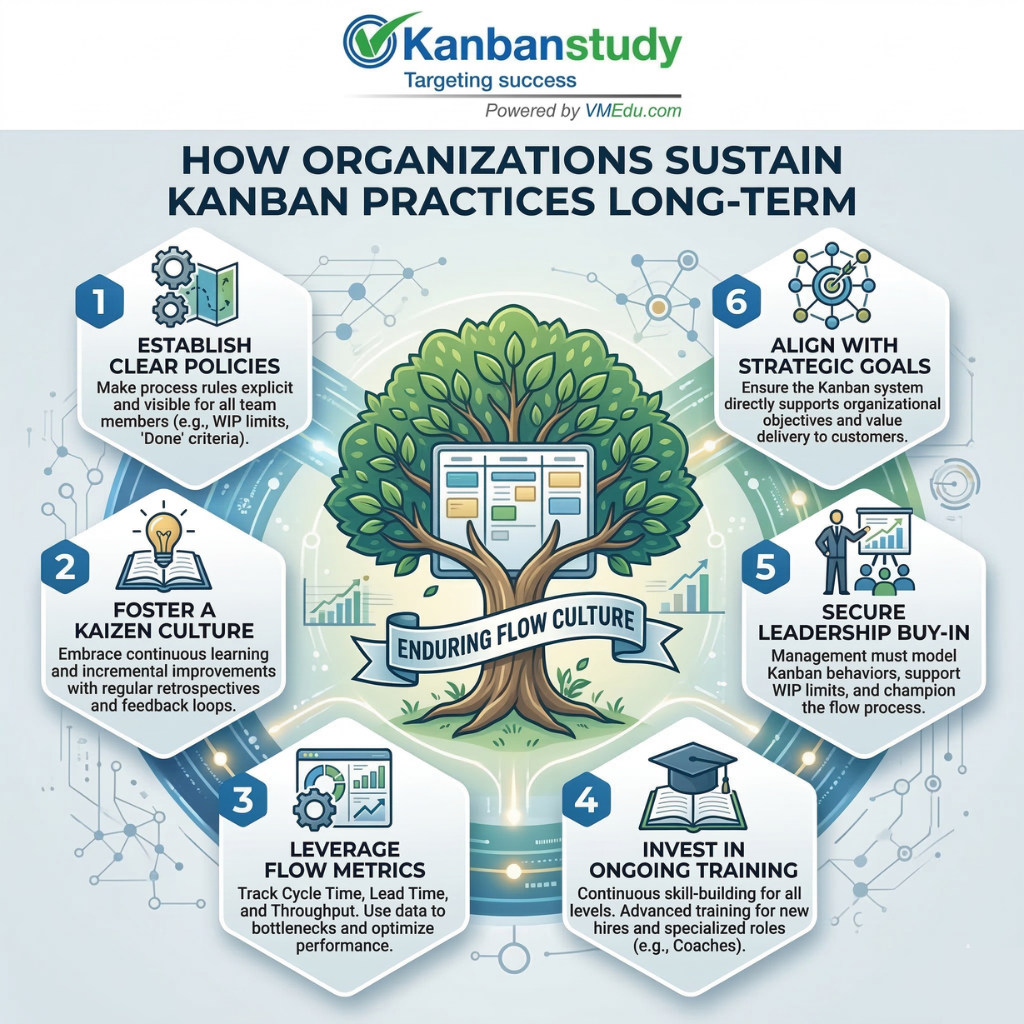
Adopting Kanban is often the first step toward improving workflow management and team productivity. However, the real challenge for many organizations is maintaining Kanban practices over the long term. Successful long-term adoption requires consistent effort, continuous improvement, and a strong understanding of Kanban principles. When organizations focus on these areas, they can ensure that Kanban remains effective and continues to deliver value.
One of the most important ways to maintain Kanban practices is by keeping the workflow visible. A Kanban board acts as the central tool for managing work. Tasks are displayed as cards and move through different stages such as “To Do,” “In Progress,” “Review,” and “Done.” By maintaining this visual system, teams can always see the status of work and understand where attention is needed. When teams regularly use and update the board, it becomes a reliable source of information for everyone involved.
Another key factor in sustaining Kanban practices is respecting Work in Progress (WIP) limits. These limits control how many tasks can be active in a specific stage of the workflow. Over time, some teams may start ignoring these limits and begin taking on more work than they can manage. This can reduce efficiency and create bottlenecks. Organizations should encourage teams to follow WIP limits consistently so that work continues to flow smoothly.
Regular workflow reviews also help maintain Kanban practices. Teams should frequently analyze their processes to understand how work is moving through the system. By reviewing the board and discussing progress, teams can identify delays, inefficiencies, or bottlenecks. Once these issues are identified, teams can experiment with small improvements that enhance productivity.
Another important practice is using performance metrics. Kanban encourages teams to track metrics such as lead time, cycle time, and throughput. These metrics provide valuable insights into how efficiently tasks are being completed. When organizations regularly analyze these metrics, they can identify trends and make better decisions about improving their workflow.
Maintaining Kanban practices also requires a culture of continuous improvement. Teams should always look for opportunities to refine their processes and remove inefficiencies. Small changes over time can lead to significant improvements in productivity and workflow stability. Encouraging team members to share ideas and suggestions helps keep the Kanban system active and effective.
Leadership support is also essential for long-term success. Managers and team leaders should promote Kanban practices and ensure that teams have the resources needed to follow them. When leadership actively supports Kanban, it becomes easier for teams to maintain consistent practices and stay focused on workflow improvement.
Kanban can also be combined with other Agile frameworks such as Scrum. Some organizations use Scrum for structured planning and team coordination while using Kanban boards to visualize tasks and manage workflow. This combination helps teams maintain both organization and flexibility.
Training and education also play a significant role in sustaining Kanban practices. When team members fully understand the principles behind Kanban, they are more likely to apply them correctly. Professional training programs such as the Kanbanstudy certification provide valuable knowledge about Kanban concepts and practices.
The Kanbanstudy certification helps professionals learn key topics such as workflow visualization, Work in Progress limits, and flow-based metrics. These concepts help teams maintain efficient workflows and identify opportunities for improvement.
Another benefit of the Kanbanstudy certification is that it focuses on practical applications and real-world scenarios. Professionals learn how to implement Kanban systems, analyze workflow performance, and maintain effective processes over time.
In conclusion, maintaining Kanban practices long term requires consistent use of visual boards, adherence to WIP limits, regular workflow reviews, and continuous improvement. Organizations that analyze performance metrics and provide proper training can sustain these practices successfully. With guidance from programs like Kanbanstudy, professionals can develop the skills needed to maintain effective Kanban systems and ensure long-term workflow efficiency.